
We use cookies
Help us improve your experience by accepting our cookies. Find out more in our Privacy Policy
Help us improve your experience by accepting our cookies. Find out more in our Privacy Policy
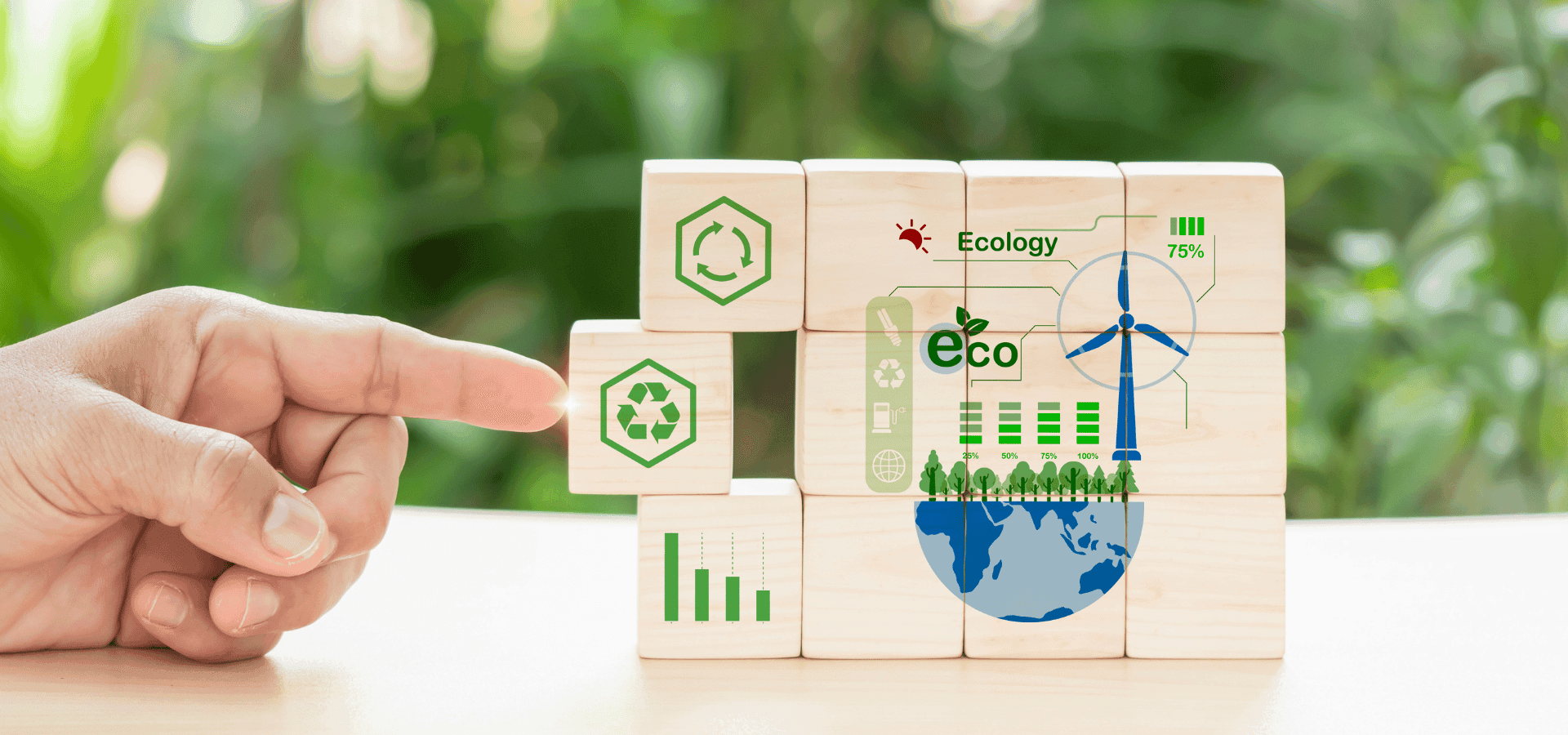
Despite global headwinds, the green transition remains a source of job security: According to a new study, nearly one in three job postings in Germany in 2025 was related to the green economy.
The economy remains on a green track.
Despite global trends moving away from climate protection and the green transition, the green economy remains of central importance to companies in Germany. A new study by the Bertelsmann Stiftung shows that nearly one in three of the 9.9 million job openings in Germany in 2025 was related to the green economy. The circular economy accounts for the largest share, at 15.6% of all jobs advertised in Germany. This is followed by the sectors of environmental protection and the transportation transition.
A key driver of job growth here is industry. 44% of the jobs advertised there in 2025 are related to the green economy. Here, too, the trend is upward despite fluctuating social and political conditions.
The analysis at the local level also shows that there are clear regional focal points within the green economy. For example, jobs in the field of the transportation transition are advertised particularly in southern Germany. Jobs in the wind energy sector are sought in the north, with a focus on solar energy in the southeast of the country. There is also a high demand for personnel in eastern Germany, where job postings primarily relate to the circular economy as well as environmental protection and emissions reduction.
We were also interested in these topics:
Four-Day Success: A broad pilot program for the four-day workweek has been underway in Iceland since 2019. Recent analyses now show stable operations in companies and, in some cases, even increased productivity. Additionally, employees report less stress and a better work-life balance.
Automation risk: AI will partially or even completely automate some jobs. Die Zeit has developed an interactive tool (€) on this topic, featuring data on 400 professions, which shows how replaceable your job is.
AI exacerbates gender inequality: AI primarily replaces the work of women—and systematically disadvantages them. The reasons for the disproportionate job losses include, among other things, the insufficient number of women in leadership positions, a lack of union protection for the relevant professions, and the unequal distribution of care work.
This text first appeared as an editorial in the weekly politjobs newsletter. If you’d like to receive this newsletter with the latest jobs in the political sector directly by email every Wednesday, you can subscribe here.