
We use cookies
Help us improve your experience by accepting our cookies. Find out more in our Privacy Policy
Help us improve your experience by accepting our cookies. Find out more in our Privacy Policy
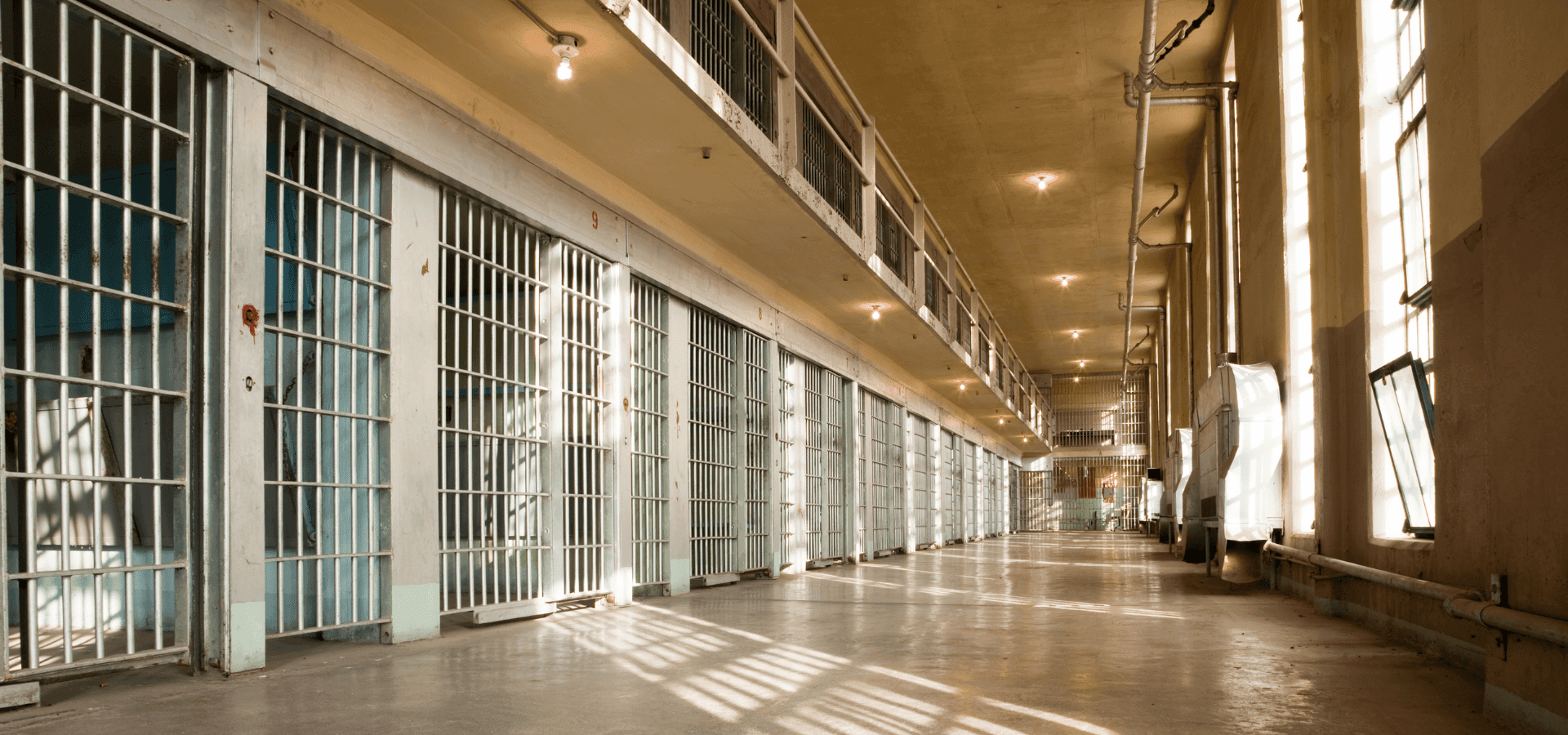
Prisoners must be better compensated, the Federal Constitutional Court recently ruled. The background to this can be found here.
Prisoners in Germany are (in most federal states) generally required to work, but receive only minimal wages for the work they do. The hourly wage is currently 9% of the average wage for all pension insurance contributors, which corresponds to between €1.37 and €2.30 per hour, depending on qualifications. Prisoners from Bavaria and North Rhine-Westphalia have now successfully challenged this before the Federal Constitutional Court.
In their ruling, the judges in Karlsruhe declared the prison laws of the two states to be unconstitutional. The reason given for this is the requirement of rehabilitation: prisoners are fundamentally entitled to be prepared for a life without crime. Work plays a decisive role in this and should therefore be adequately remunerated. If the work performed has no equivalent value, prisoners are degraded to “objects of state power,” according to the ruling. North Rhine-Westphalia and Bavaria now have until June 2025 to adopt new “consistent” regulations. However, the ruling is also likely to send a signal to other federal states: either they adapt their prison laws as well, or they run the risk of being successfully sued. However, legislators have considerable leeway in the new regulations: for example, remuneration can take into account the fact that prisoner labor is generally less productive, or wages can be earmarked for reparations and maintenance payments. The actual tangible consequences of the ruling therefore remain to be seen.
We were also interested in the following topics:
Social media: Working as a content moderator is extremely stressful, a Meta moderator recently told the Bundestag's Digital Committee. This moderator has now been suspended from duty because of his appearance – the RND knows how Verdi and the Digital Committee are responding.
Inflation: Last year, labor costs rose by 6.4% – the sharpest increase in a long time. Despite these rising costs, employees suffered real wage losses due to inflation, writes Die Zeit.
Pensions: Nearly 70% of the baby boomer generation would prefer to retire early. This was the finding of a study by the University of Wuppertal, which surveyed around 9,000 people born in 1959, 1965, and 1971. Details and reasons for the (desired) early retirement can be found at Spiegel.
Employer attractiveness: What are the most attractive employers from the perspective of students? The Universum Student Survey investigated this and concluded that employers in the energy supply and defense industries have gained in popularity, while Tesla has suffered losses. Further details are available at PR Journal.
Office animals: Last Friday was “Office Dog Day.” To mark the occasion, t3n collected arguments for having animals in the office—such as less stress and more contact with colleagues.
This text first appeared as an editorial in the weekly politjobs newsletter. If you would like to receive this newsletter with the latest jobs in politics directly by email every Wednesday, you can subscribe to it here.
Spread the word: Do you have friends or acquaintances who are also interested in political jobs? Feel free to forward the registration form for our newsletter.