
We use cookies
Help us improve your experience by accepting our cookies. Find out more in our Privacy Policy
Help us improve your experience by accepting our cookies. Find out more in our Privacy Policy
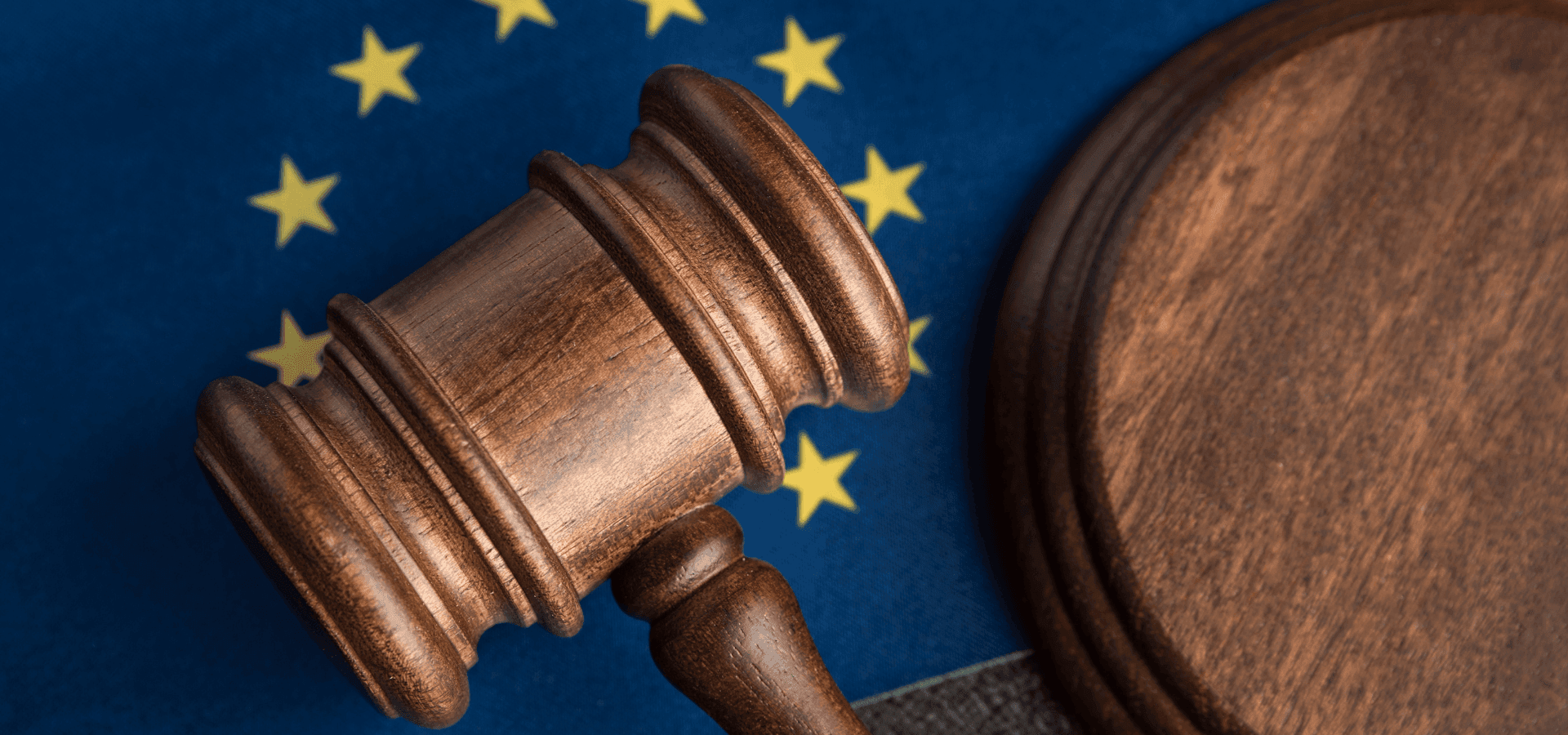
The EU has adopted the AI Act and thus a common vision on AI. The German business community welcomes and criticizes the regulation.
A long-awaited milestone in political AI regulation was finally reached last Friday: in negotiations that have been ongoing since 2021, the EU Commission, Council, and Parliament have now agreed on a joint version of the AI Act. Although technical details still need to be worked out, this marks the achievement of a major EU goal: the first supranational regulation of AI applications is intended not only to be a binding set of rules for Europe, but also to send an international signal.
But what concrete impact will this legislation have on the economy, which in some cases has already integrated AI as an integral part of its work? Fundamentally, the AI Act is also intended to serve to strengthen Europe as a business location, particularly in the area of AI companies based here. However, some fear the opposite effect: Bitkom CEO Rohleder, for example, warns that overregulation could weaken Europe as a business location. The regulation of generative AI, which is at the heart of the AI Act, “overshoots the mark.” The German Start-up Association and the AI Association have also expressed similar concerns: they claim that the law is too vague and bureaucratic, and that young companies with limited resources in particular are at a disadvantage in international competition. Overall, however, the industry welcomes the EU's initiative to establish binding and uniform regulations for the use and development of AI. This will set a global standard and at the same time create legal certainty for companies.
We were also interested in these topics:
Health in the workplace: Employees in Germany are often exposed to high levels of stress in the workplace – whether this is time pressure, noise, or conflicts with colleagues. This is the conclusion of a survey conducted by the DGB, the results of which are summarized by ZDF.
2024 budget: Despite the current budget dispute in the coalition government, Finance Minister Lindner is planning tax breaks for employees. These are intended in particular to relieve the middle class, writes the FAZ.
Tesla in Scandinavia: Tesla has been on strike in Sweden since the end of October, with the local union demanding a collective agreement for its members, which Tesla rejects on principle. Now the strike is not only spreading to other occupational groups, but is also making waves internationally: In Denmark, Norway, and most recently Finland, Tesla employees are also showing solidarity with the strikers.
Careers: Young employees from Gen Z and the millennial generation often no longer work their way up the traditional career ladder, but skip middle management. Business Insider has investigated whether this represents the end of middle management.
We want your feedback! To help us make our newsletter more interesting for you, we would appreciate it if you could take 3-5 minutes to fill out this survey. Whether you are a long-time reader or just subscribed two weeks ago, we would love to hear from you!
By the way: politjobs is now also on Bluesky! Follow us at @politjobs.bsky.social and you'll get the latest jobs delivered directly to your feed. Don't have Bluesky? Then you can also subscribe to our new WhatsApp channel. Just click here!
This text first appeared as an editorial in the weekly politjobs newsletter. If you would like to receive this newsletter with the latest jobs in politics directly by email every Wednesday, you can subscribe to it here.
Spread the word: Do you have friends or acquaintances who are also interested in political jobs? Feel free to forward the registration form for our newsletter.