
We use cookies
Help us improve your experience by accepting our cookies. Find out more in our Privacy Policy
Help us improve your experience by accepting our cookies. Find out more in our Privacy Policy
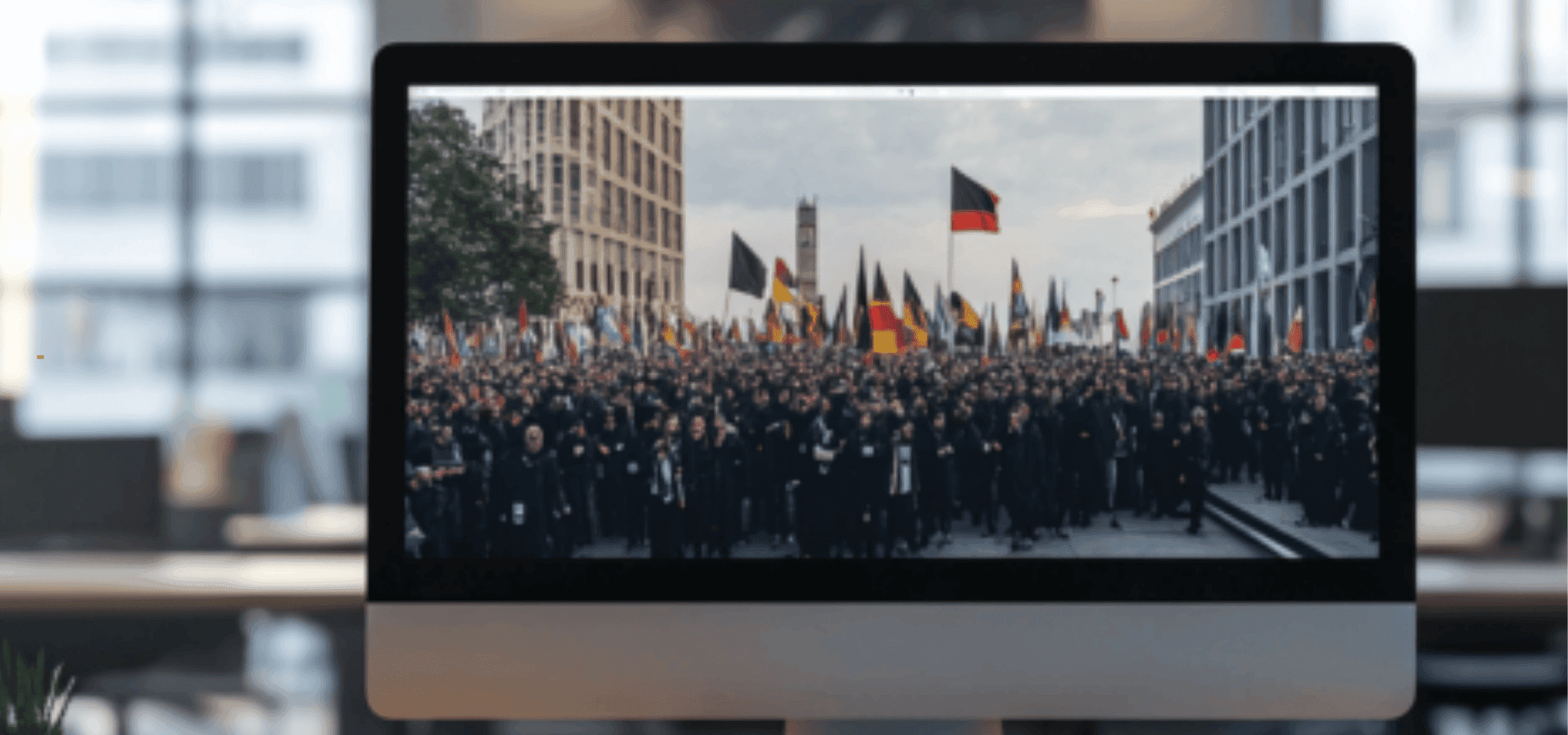
A new study shows that one in three employees in Germany has noticed right-wing extremist attitudes in the workplace.
One in three employees in Germany has noticed right-wing extremist attitudes in the workplace, and almost ten percent have been personally affected as victims. These alarming figures were collected in a new study by Gesicht Zeigen! (Show Your Face!), which provides the first insight into the prevalence of right-wing extremism in the German workplace.
In addition to the existence of such attitudes, the behavior of companies often poses a problem: in less than 20% of the reported cases, appropriate measures or sanctions were implemented. Yet these are highly effective: around 75% of respondents who have witnessed such reactions consider the measures taken to be successful and have not observed any repeat incidents of right-wing extremism. However, almost two-thirds of respondents who witness right-wing extremist incidents would like to see more commitment from their employers.
The study also addresses the consequences for the working atmosphere in affected companies and states that a clear majority observe generally negative effects. One-third also fear difficulties in recruiting and retaining skilled workers. In contrast, however, 20% of the employees surveyed believe that the spread of right-wing extremist attitudes has no impact whatsoever on the workplace, the company's reputation, or the success of retaining skilled workers. Among decision-makers, as many as one in three share this opinion. For the managing director of Gesicht Zeigen! (Show Your Face!), Sophia Oppermann, this is a clear sign that the danger posed by right-wing extremism is still being underestimated.
For this reason, she calls on companies to take a clear stance and decisive action against right-wing extremism. Possible measures include anchoring democratic values in the corporate image, establishing annual workshops or training courses on the topic, and appointing a permanent contact person within the company.
We were also interested in the following topics:
Ecological transformation: Whether regions can compensate for job losses resulting from the transformation depends heavily on the local industry structure—and this varies greatly across Germany depending on the location. A study by the IAB examines where energy-intensive industries are particularly strongly represented and what effects are expected on regional labor markets.
Home office: Only four percent of companies want to completely abolish home office again, according to an ifo survey. The Handelsblatt shows which options the other 96% have chosen.
Pension policy: The CDU has already announced some plans that it would implement if it took over government responsibility. Now it is also commenting on pension policy: the retirement age should be raised quickly. Details can be found in the Tagesspiegel.
Are you a communications professional or would you like to become one? CHECKPOINT Corporate Communications on September 3 in Frankfurt/Main offers you the perfect platform to get to know the industry and attractive employers. Meet consulting firms such as Brunswick and Fink & Fuchs, who are looking for you to join their communications team!
Are you interested in political consulting? Come to our CHECKPOINT Political Consulting event in Berlin on October 24! Here you will have the opportunity to get to know renowned consultancies such as 365 Sherpas, Johanssen + Kretschmer, and EUTOP and gain an authentic insight into the industry. Further information can also be found at ckpt.org.
This text first appeared as an editorial in the weekly politjobs newsletter. If you would like to receive this newsletter with the latest jobs in politics directly by email every Wednesday, you can subscribe to it here.
Spread the word: Do you have friends or acquaintances who are also interested in political jobs? Feel free to forward the registration form for our newsletter.